Cinema Story Digest
Explore Cinema Story Digest
  • Home
  • Film Reviews
  • Character Profiles
  • Narrative Deconstructions
  • Thematic Articles
  • Gallery & Stills
  • FAQ
  • Contact

Gallery & stills

The table as a pressure chamber

This is a close-reading gallery of scenes where a table becomes a stage for negotiation, deception, surveillance, and emotional exposure. Across casino drama, card-room tension, heist spectacle, and psychological noir, Cinema Story Digest looks at framing, bodies, objects, light, and withheld information—not gameplay.

Each plate names its film, identifies a scene’s pressure point, and isolates visual evidence worth noticing. Captions remain visible, distinguish observation from interpretation, and accompany rights-aware still-inspired editorial imagery. Cinema Story Digest is an independent editorial film portal; it offers no gambling services, real-money wagering, or direct movie streaming.

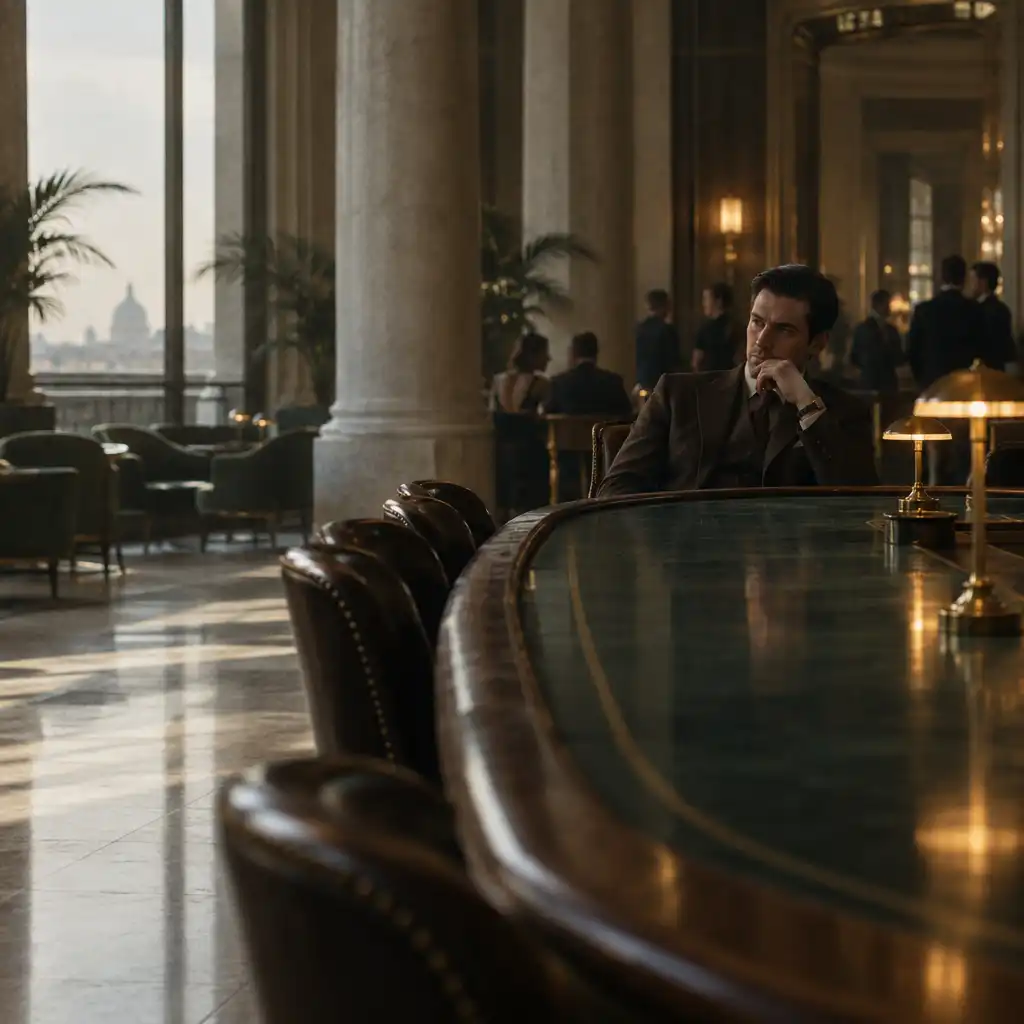
A composed figure seated at the far end of a long polished lounge table, with columns and blurred patrons receding behind
Editorial plate. A long table and distant seated figure turn an open room into a measured field of attention; still-inspired image presented for contextual criticism.

A viewing key

The visual grammar of confrontation

Before following the five films, look for the decisions that make a quiet exchange feel dangerous or revealing. A table scene often works through where the camera stands, what the frame interrupts, and which details are allowed to carry the burden of speech.

01

Distance and dominance

Who gets room to move?

Camera distance can make one face the decisive action, or it can expose a hierarchy through seating, exits, and empty space. A wide frame may leave a character stranded at one end of the table; a blocked foreground can make us feel like an eavesdropper. These are interpretive cues, not claims about a production’s technical setup.

02

Hands, cards, and surfaces

What does the object know?

Hands, glasses, ashtrays, felt, and polished wood become evidence before dialogue settles anything. A prop can direct the eye toward hesitation; a reflection can split a clean eyeline; a close-up can withhold a face while increasing tension. The point is narrative attention, never an invitation to gamble.

03

Editorial observation

Colour as emotional alibi

Saturated interiors can look welcoming while staging coercion. Cyan shadow can turn luxury into surveillance, while neutral daylight may make a room feel brutally exposed. Notice costume contrast too: it can quietly establish who belongs, who performs belonging, and who is left visible against the room.

Five close readings

Five table confrontations

These plates do not rank films or turn their settings into spectacle. They follow how familiar high-stakes cinema uses the table as an organising line: a place where a room gathers, a face is tested, an ensemble performs, or an observer holds distance.

01

Casino: the room watches back

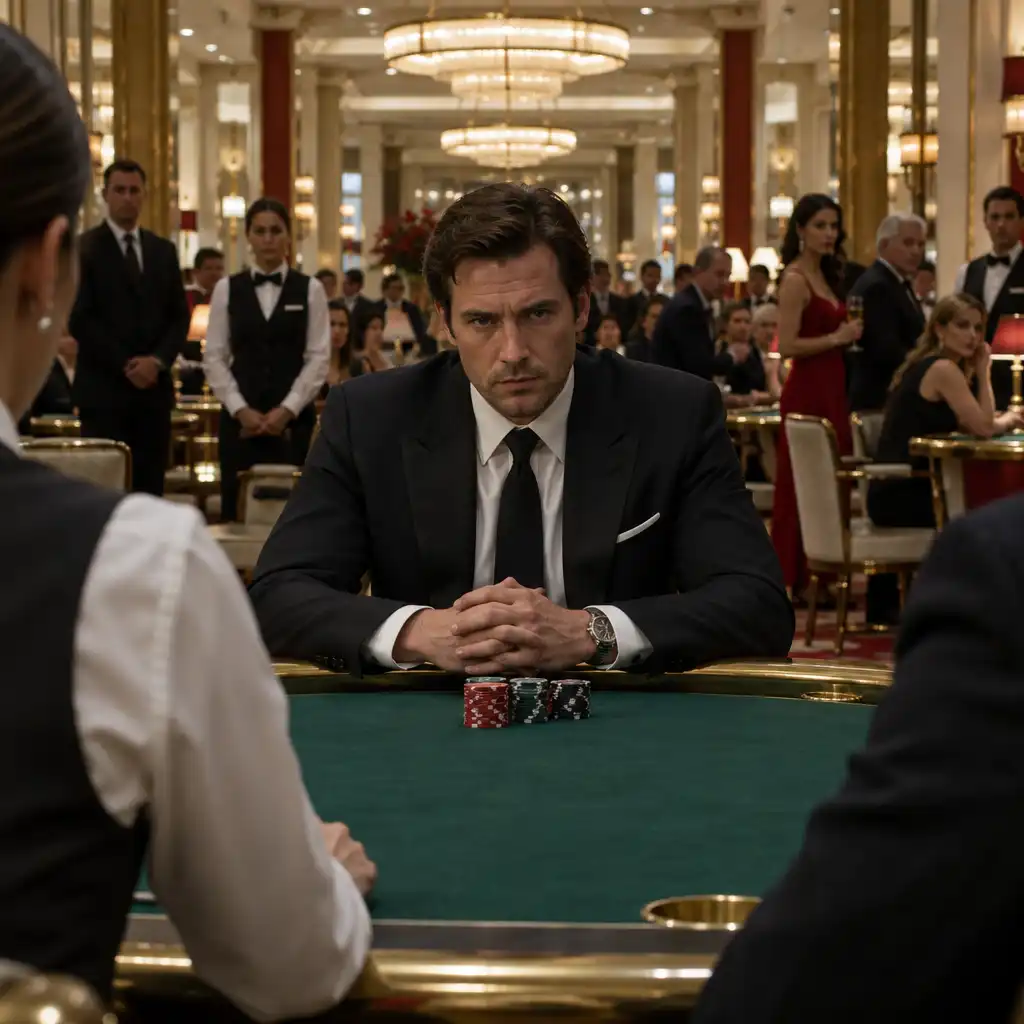
A casino-floor table scene can distribute authority across the entire room. The central figure is never fully private: staff silhouettes, passing patrons, bright architecture, and layered depth make every pause seem publicly registered. Polished surfaces and hard highlights give luxury an exposed quality rather than an intimate one. Instead of treating the table as a site of play, this reading follows the film’s visual interest in systems of control—who is watched, who belongs in the frame, and how a crowded background can press inward on a solitary decision.

A formally dressed man seated at a green felt table while staff silhouettes and patrons fill the bright casino background
Casino — a crowded table arrangement makes surrounding bodies and institutional space part of the confrontation; still-inspired image for editorial analysis.

02

Rounders: the face as a hidden card

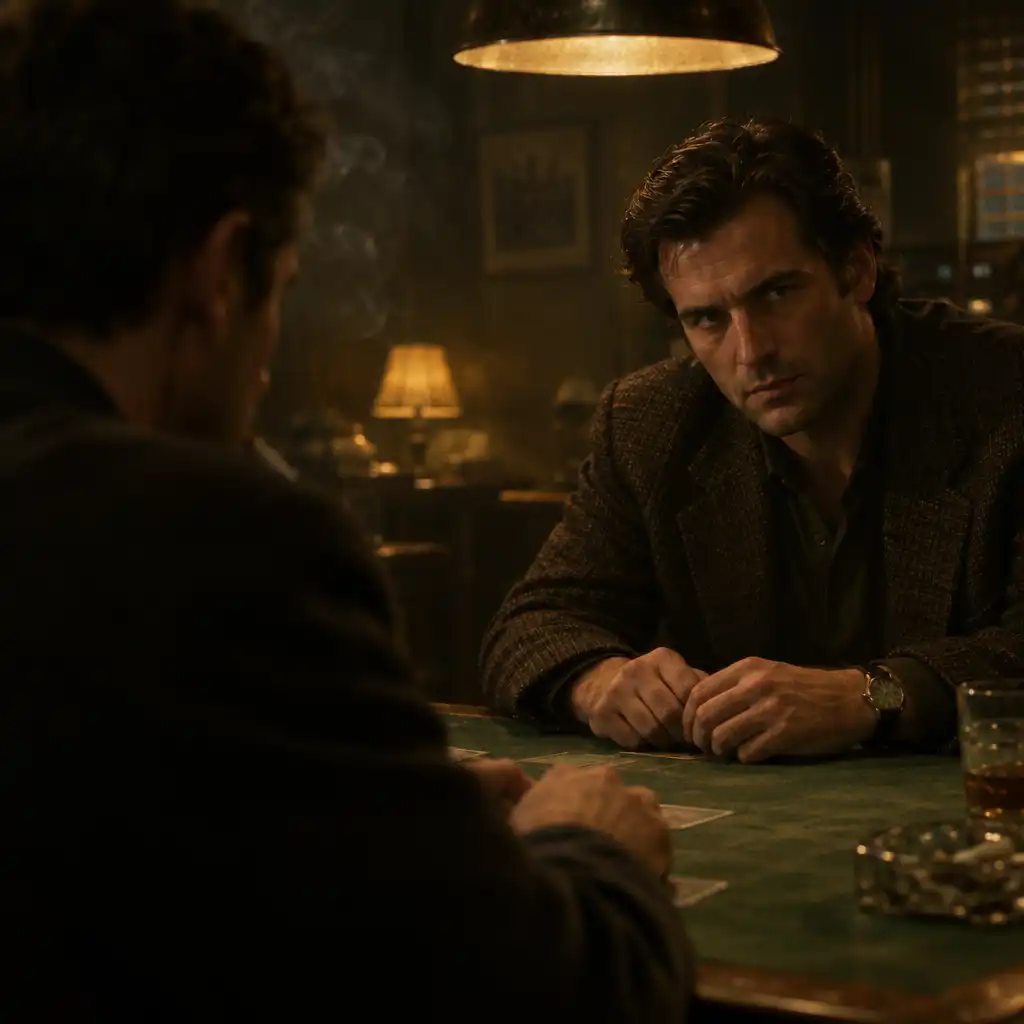
In a card-room confrontation, constrained framing lets facial control and small gestures outweigh overt action. The close sightline across the table turns one focused face into a pressure point, while a softened shoulder or hand in the foreground makes the image feel overheard. The room may be crowded, yet the composition looks inward: attention narrows to restraint, delayed reaction, and the difficulty of reading another person. Cards and hands operate here as narrative objects, holding the scene’s uncertainty without becoming advice about how to play.

Two men opposite one another at a worn felt table, one face sharply focused across a shadowed foreground shoulder
Rounders — eyelines, a foreground shoulder, and resting hands compress a busy card room into a portrait of contained attention; still-inspired image for editorial analysis.
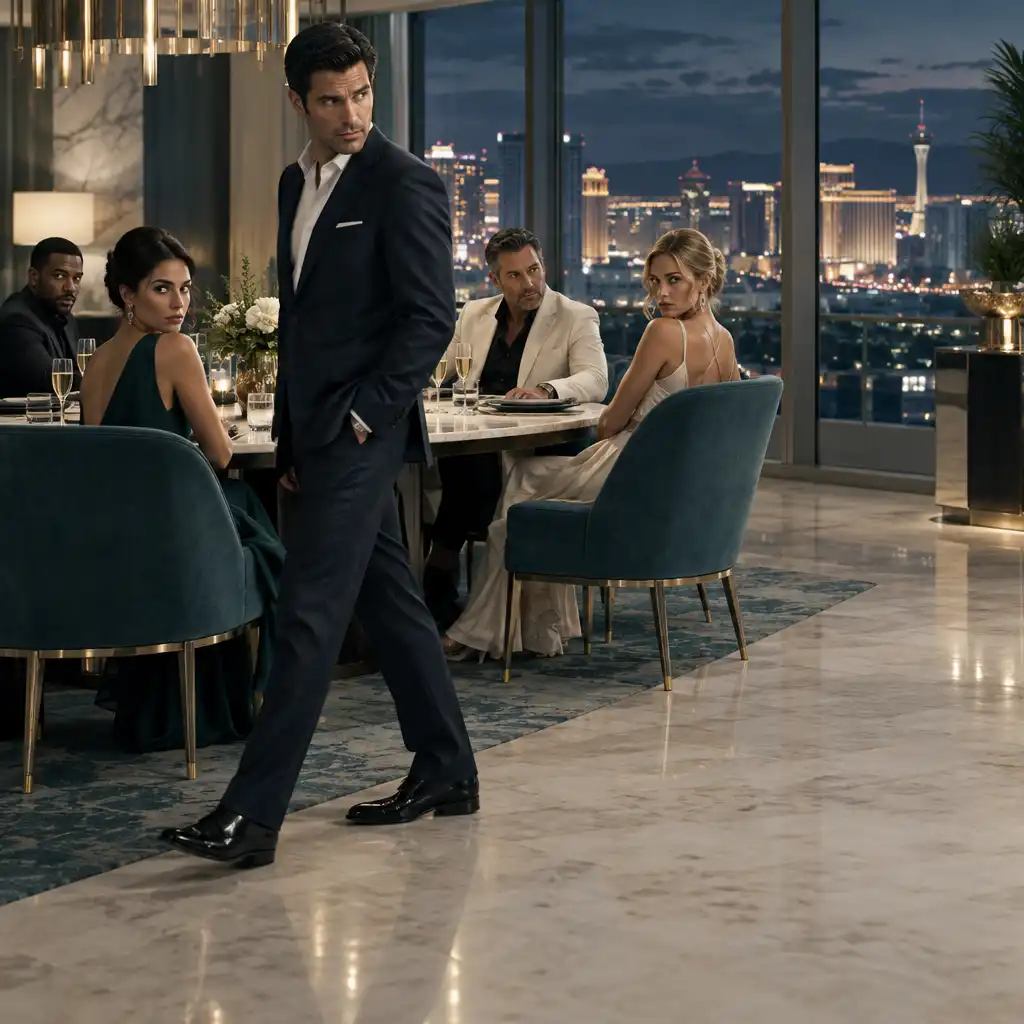
Several well-dressed figures arranged around a private table, with one standing figure crossing the ensemble composition
Ocean's Eleven — a balanced ensemble around a table makes glances, costume, and furniture lines feel like part of a carefully arranged performance; still-inspired image for editorial analysis.

03

Ocean's Eleven: choreography in plain sight

An ensemble table encounter transforms conversation into a map of alliance, performance, and withheld intention. Bodies, furniture, and glances create diagonals that keep the eye circulating even when the frame looks balanced. Tailored costume and controlled light lend the image surface confidence, but that polish does not equal equal knowledge. The composition invites a useful question: who can see the whole arrangement, and who is performing without access to its full plan?

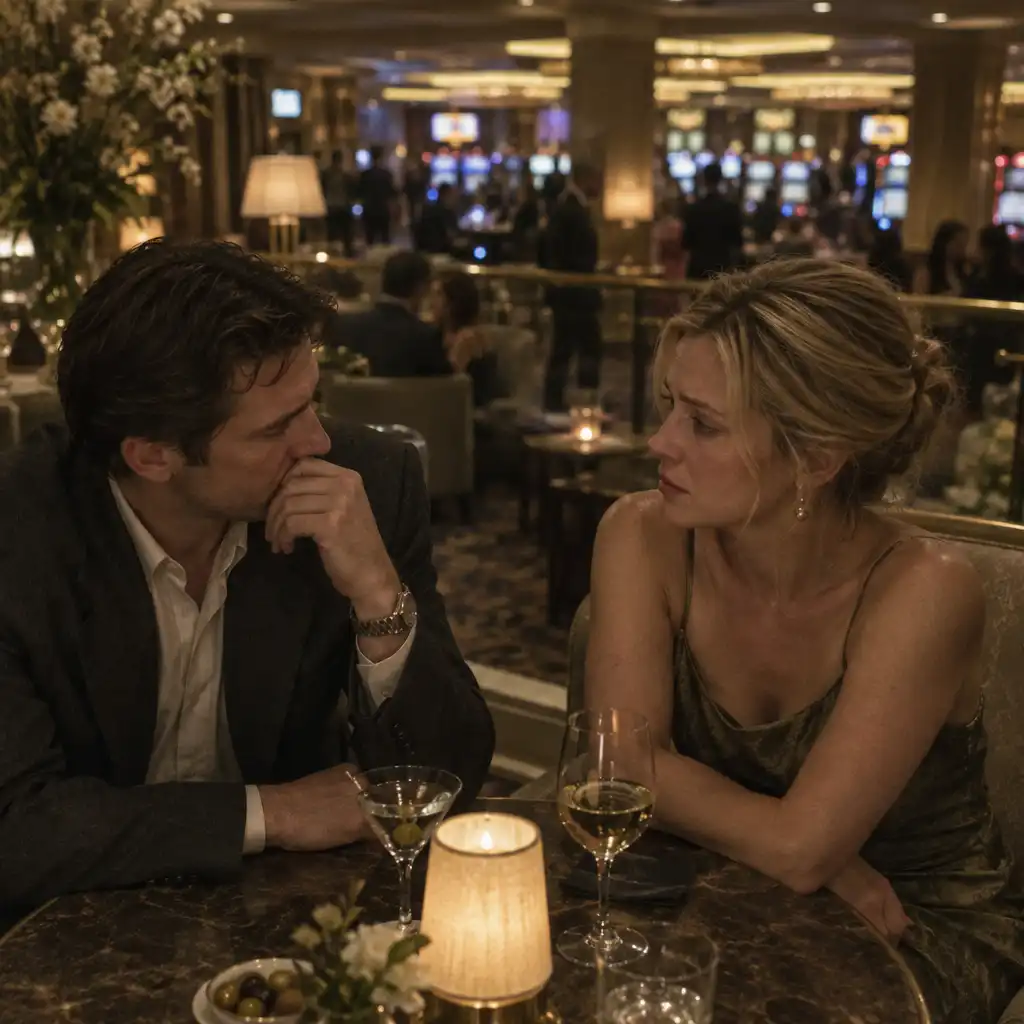
Two people sit close at a small lounge table under soft fluorescent and amber light, with a blurred busy interior beyond
The Cooler — faces held near a small table and softened floor light make closeness appear fragile rather than secure; still-inspired image for editorial analysis.

04

The Cooler: intimacy under fluorescent pressure

This table scene suggests an uneasy collision between tenderness and an institutional interior. Practical light, compressed space, and faces held against a busy background keep closeness from becoming completely safe. The faded palette may separate the pair from the room, but it also makes the surrounding environment feel inescapable. Rather than claiming a technical intention, the image asks viewers to inspect mood: does the table offer a private refuge, or does it merely make vulnerability easier to see?

05

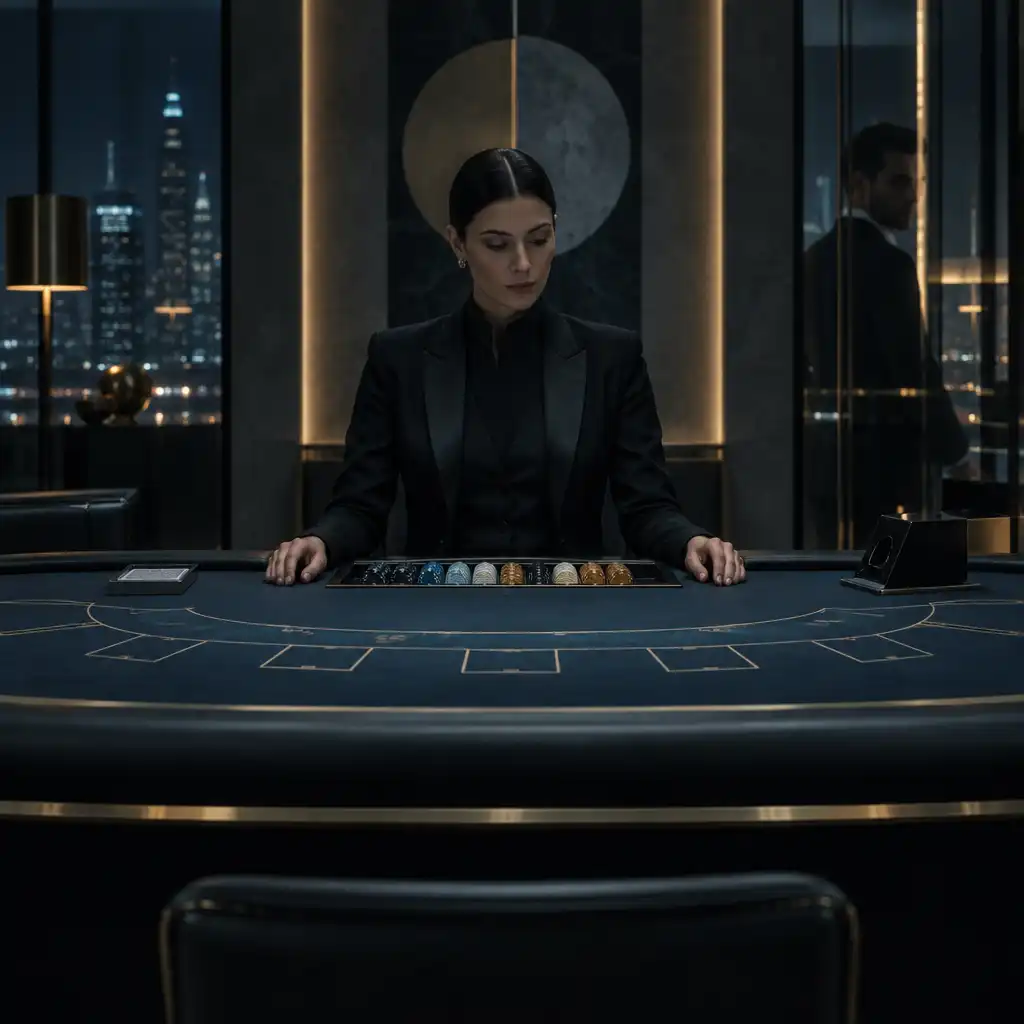
Croupier: the controlled gaze

Cool noir restraint can make observation itself feel morally unstable. An ordered table arrangement, controlled posture, and hard geometry give the scene an almost procedural calm, while a reflection or partial second figure unsettles that control. The key relation is between observer and observed: the frame can position us beside the person who watches, then make that position uncomfortable. Visual calm leaves room for concealed motive, proving that tension does not require visible disorder.

This gallery offers independent film criticism and visual analysis. It does not provide gambling services, real-money wagering, or direct movie streaming.
A composed dark-clothed figure behind a precisely ordered table, with another figure partly reflected in a polished surface
Croupier — central geometry and a disturbed reflection place order and observation in the same frame; still-inspired image for editorial analysis.

Beyond the plate

What the frames withhold

Off-screen pressure

A table scene can remain charged because the frame excludes as much as it reveals. A missing participant, an unseen watcher, or a decision that has not yet become visible sits just beyond the crop. Cropped bodies and blocked exits turn the room into a partial map, while silence, pauses, and fixed attention become a kind of visual timing. None of this requires fabricated trivia: it is a matter of watching how a frame rationes access, making us wait for information at the same pace as the people inside it.

A table is rarely only furniture in high-stakes cinema; it is the boundary that tells us who may speak, who must wait, and who is already being watched.

Cinema Story Digest editorial interpretation

The spectator’s position

Ask where the still places you. Are you seated at the table, stationed behind a character, or held at the distance of a surveillance room? Viewpoint affects moral alignment as much as suspense. The same lounge can appear intimate when the camera shares a face-level eyeline, then hostile when it observes through glass, furniture, or a crowd. Return to the five plates with one sharper question: what does the composition let you know early, and what does it make you experience only as pressure?

Compare the frame

A comparison of cinematic pressure

This matrix compares visual strategies rather than ranking films or reducing them to one genre label. Read across four lenses—space, gaze, palette, and emotional temperature—to see how each title uses a recurring table image differently. The table is a device, not a universal formula.

FilmSpaceGazePaletteEmotional temperature
CasinoExpansive, layered, and institutional.Watched by the room as much as by another character.Polished cream, brass, and hard highlights.Public pressure beneath luxury.
RoundersCompressed around a face and table edge.Close, face-led, and withheld.Muted amber and olive practical light.Contained concentration.
Ocean's ElevenChoreographed through ensemble diagonals.Shared, performative, and strategically incomplete.Tailored cream with cool slate shadow.Surface confidence with concealed knowledge.
The CoolerIntimate but hemmed in by the room.Near enough to feel fragile.Fluorescent warmth, faded gold, and charcoal.Uneasy tenderness.
CroupierOrdered by clean geometry and reflection.Observant, distant, and morally unsettled.Cool blue-grey with restrained amber.Controlled calm.

Casino

Space
Expansive, layered, and institutional.
Gaze
Watched by the room as much as by another character.
Palette
Polished cream, brass, and hard highlights.
Emotional temperature
Public pressure beneath luxury.

Rounders

Space
Compressed around a face and table edge.
Gaze
Close, face-led, and withheld.
Palette
Muted amber and olive practical light.
Emotional temperature
Contained concentration.

Ocean's Eleven

Space
Choreographed through ensemble diagonals.
Gaze
Shared, performative, and strategically incomplete.
Palette
Tailored cream with cool slate shadow.
Emotional temperature
Surface confidence with concealed knowledge.

The Cooler

Space
Intimate but hemmed in by the room.
Gaze
Near enough to feel fragile.
Palette
Fluorescent warmth, faded gold, and charcoal.
Emotional temperature
Uneasy tenderness.

Croupier

Space
Ordered by clean geometry and reflection.
Gaze
Observant, distant, and morally unsettled.
Palette
Cool blue-grey with restrained amber.
Emotional temperature
Controlled calm.

Editorial standards

Captioning and image ethics

Caption before interpretation

Our captions identify the film, place the scene in broad context, and distinguish visible evidence from editorial interpretation. They stay below images rather than hiding in hover overlays, so the gallery works for touch users and for readers who want to pause. Alt text describes the visible composition for screen-reader users, while scene context avoids unnecessary plot-spoiler detail where possible.

Rights-aware presentation

Film titles, stills, posters, and trademarks belong to their respective rights holders. Cinema Story Digest provides independent educational and editorial commentary; images are framed for contextual criticism, optimised for reading, and not offered as downloadable assets. This page does not imply studio affiliation or provide movie streaming.

Keep reading

Continue the close reading

Narrative Deconstructions

Move from a single frame to scene structure, pacing, reversals, and what a film reveals or withholds over time. These long-form readings follow how visual pressure changes once a sequence begins to move.

Explore scene breakdowns

Character Profiles

Follow motive, performance, costume, gesture, and changing audience alignment through character-focused criticism. These are analyses of screen presence and dramatic position, not celebrity biography.

Read character profiles

Thematic Articles

Explore essays linking high-stakes cinema to surveillance, masculinity, chance, performance, urban night, and moral compromise. The aim is to test ideas across films, not to promote their settings.

Browse thematic essays

New Zealand viewing utility

Find relevant films legally in New Zealand

Availability changes by service and date. Cinema Story Digest does not stream films or sell access, but New Zealand visitors can use this curated external directory to check current legal viewing options. It is a discovery tool rather than a guarantee that every film in this gallery is currently available, and it opens in a new tab.

Check NZ availability on JustWatch ↗ (opens in a new tab)

Editorial scope

Cinema criticism, not gambling services

Cinema Story Digest studies films and visual culture around casinos, card rooms, heists, and noir as independent editorial commentary. This gallery provides no gambling services, real-money wagering, or direct movie streaming; its purpose is to help viewers read high-stakes cinema more closely.

Cinema Story Digest

Independent criticism, scene analysis and viewing guidance for high-stakes cinema in New Zealand.

Check NZ availability on JustWatch ↗ (opens in a new tab)

Editorial

  • Home
  • Film Reviews
  • Character Profiles
  • Narrative Deconstructions
  • Gallery & Stills
  • Thematic Articles
  • FAQ

Information

  • Privacy Policy
  • Cookie Policy
  • Terms of Use
  • Editorial Standards
  • Contact

Contact

[email protected]
+64 9 887 4261

18 Kauri Street
Auckland 1010
New Zealand

The Casino Reel NZ is an independent educational and editorial film portal. This website does not offer gambling services, real-money wagering, or movie streaming. All movie titles, stills, posters, and trademarks are the property of their respective production studios and copyright holders.

© 2026 Cinema Story Digest. All rights reserved.

Cookie preferences

We use essential storage to remember this choice. Read our Cookie Policy for details.